One of the strangest things I've noticed is that people talk about life as if it's constantly running out.
Every conversation sounds like a countdown.
"I'm already 25."
"I'm already 30."
"I feel behind."
Behind who?
According to what schedule?
A lot of people live as if one bad year permanently damages the trajectory of their life.
One failed business.
One bad relationship.
One degree they didn't finish.
One opportunity they missed.
And suddenly they start talking about themselves like a company that's already gone bankrupt.
I've never understood that.
A 25-year-old has roughly 15,000 days until they're 65.
Think about how absurd that number is.
You could spend five years building a company that completely fails.
Five more years building another one that fails.
Five more years learning an entirely different industry.
And you'd still have decades left.
Yet people act as if one failed attempt is a final verdict.
Imagine a venture capitalist investing in one company, watching it fail, and then deciding they're done investing forever.
It would sound ridiculous.
Yet people do exactly that with their own lives.
One rejection.
One mistake.
One embarrassment.
And they start reducing the size of their future.
The funny thing is that nobody applies this logic to anything else.
Nobody expects to go to the gym for three months and become a beast.
Nobody expects to play piano for a year and become a master.
Nobody expects to invest for six months and become wealthy.
But when it comes to their own ambitions, people expect immediate confirmation that they're on the right path.
Life doesn't work that way.
Nature doesn't work that way.
Compounding doesn't work that way.
Most meaningful things emerge from accumulation.
Not moments.

People massively overestimate what can happen in a year.
And massively underestimate what can happen in twenty.
One year feels enormous because you're living inside it.
Twenty years feels small because you're looking at it from a distance.
But twenty years is enough time to become almost unrecognizable.
You can change careers.
Build companies.
Lose everything.
Rebuild everything.
Move countries.
Learn new skills.
Meet entirely different people.
Develop entirely different beliefs.
You can become a different person multiple times.
Most people don't realize this because they secretly believe who they are today is who they'll always be.
I don't think that's true.
I think identity is far more fluid than people want to admit.
The person reading this right now would probably struggle to predict who they'll be in ten years.
Not because they're bad at planning.
Because reality is too complex.
The future arrives through thousands of small decisions nobody notices at the time.
A conversation.
A book.
A move.
A relationship.
A random idea.
Most lives aren't changed by dramatic moments.
They're changed by tiny moments that compound.
Which is why I've never understood the obsession with being "on schedule."
Compared to who?
The billionaire who succeeded at 22?
The founder who succeeded at 45?
The investor who became wealthy at 60?
The author who published their best work at 70?
People keep comparing themselves to outliers while ignoring mathematics.
The average human life is not a sprint.
It's an absurdly long experiment.
And that's what makes it interesting.
You are not making one decision.
You are making thousands.
You are not becoming one person.
You are becoming many.
The biggest mistake isn't failing.
The biggest mistake is acting as if the current version of your life is permanent.
Because permanence is mostly an illusion.
The future is much longer than people think.
Long enough to fail.
Long enough to recover.
Long enough to reinvent yourself multiple times.
Long enough to become someone you can't currently imagine.
Which means if there's something you want to try, the risk is usually smaller than it feels.
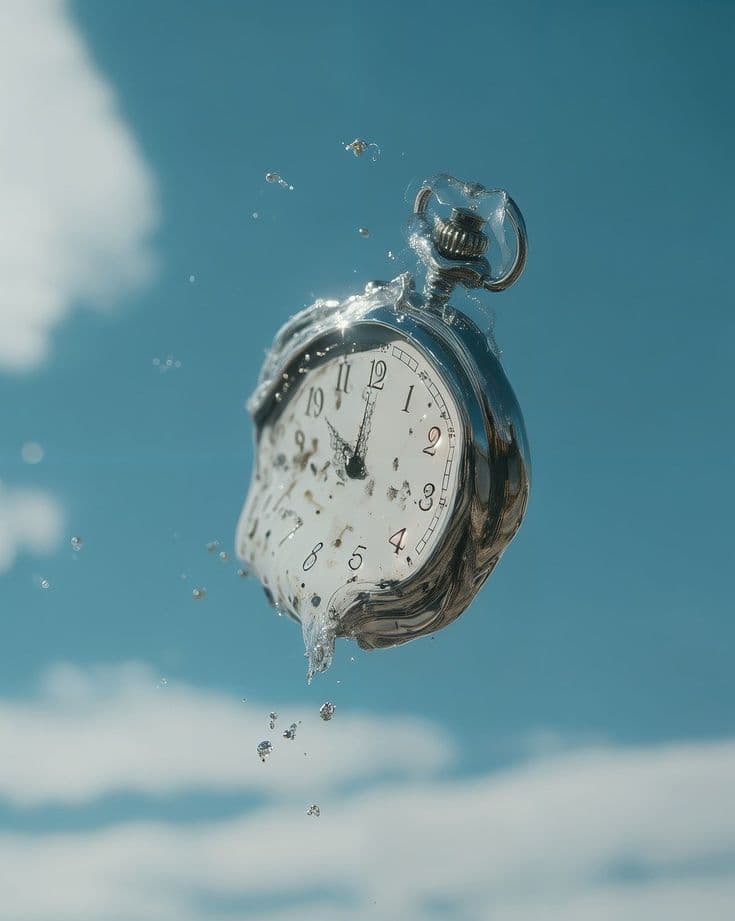
The clock is moving.
But not nearly as fast as people think.
And that's exactly why so many people waste it.